
Afro-Culture Day; Noon-Moon
Afro-Culture Day, is a living tradition in the making, a cultural rhythm that is planned to returns every month in future, but starting now with spontaneous fix date to drown attention, giving Bamberg a fresh heartbeat.
Over 150+ Operation Locations In The World
Afro-Culture Day; Noon to Moon is a high-energy, family-friendly daytime celebration of Africa’s rich and diverse cultural heritage, with evening party vibes. Set in the heart of Bamberg, this African inspired event bursts with rhythm, laughter, and connection, combining the very best of music, dance, food, fashion (hairstyling, braids, dreadlocks, sowing), literature (storytelling, Book reading), art, and joy into one unforgettable experience.
This recurring cultural gathering invites people of all backgrounds, nationalities, and ages to explore and enjoy the many flavours of African culture in a relaxed, festive, and welcoming atmosphere.
It’s not a concert, not a market, not a classroom, not visual art, not a dance event, it’s all of them combined, wrapped in Afro vibes, woven with community spirit, and fuelled by happiness in togetherness.
Afro-Culture Day, is a living tradition in the making, a cultural rhythm that is planned to returns every month in future, but starting now with spontaneous fix date to drown attention, giving Bamberg a fresh heartbeat.
The event is not commercial, it is educational and stood as a means of raising awareness creativity, Africa history, together with Bamberg heritage also a mean to support refugees skilful in Music, hair making, sewing, and cooking who live in Anker Zentrum and across asylum living house in Bamberg and beyond with opportunity to practice their skill this very event is their opportunity not for sale but message to Bamberg and German communities, and to show the world that they can do something not just been a refugee, it will also be a living classroom where both children and adults learn about Africa’s cultural richness, creativity, and community spirit.
At its core, Afro-Culture Day is a bridge between cultures showing that every rhythm, every story, and every handmade creation can teach us something about respect, equality, resilience, and shared humanity.
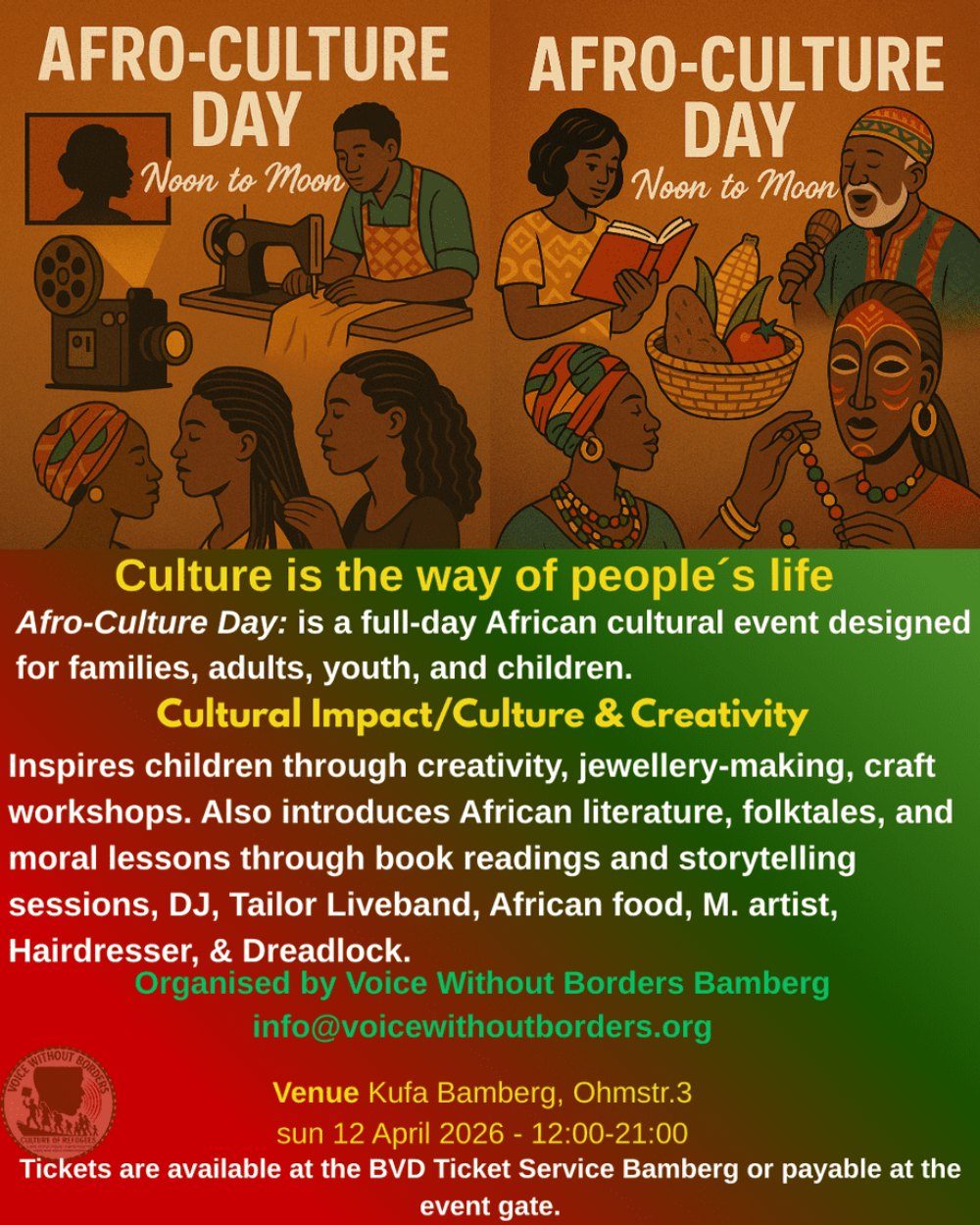
Workshop Sections.:
Afro-Culture Day brings together a diverse traditional workshop, area designed as an interactive learning space for children, and families. The workshop area is structured to be open, welcoming, and easy to understand, allowing each of every kid to take part regardless of prior knowledge or cultural background.
All workshops are hands-on, educational, and family-friendly. Participants are encouraged to learn through direct experience-by doing, observing, touching, planting, creating, modding, listening and asking questions. Children are not only watching demonstrations; they are actively involved in the process, while adults are invited to participate alongside them.
The main goals of the workshops are to:
- Introduce African cultural knowledge in a practical and accessible way
- Teach children where most of traditional African products and foods come from, how they are plant, grown, prepared, and produced
- Help participants understand the connection between nature, food, craftsmanship, and daily life
- Encourage creativity, curiosity, patience, and respect for traditional skills, manual work, and local production methods
- Create shared learning moments between children and adults, strengthening family interaction and collective learning
- Promote awareness of sustainability, natural resources, and traditional knowledge systems
The workshops also aim to show that many Africa everyday items such as foods, cosmetics, clothing, Jewelling’s organic products and tools-require time, effort, and knowledge to produce. This helps children value both modern conveniences and traditional practices.
All activities are carefully supervised by experienced facilitators from different cultural and professional backgrounds. The workshops are adapted to suit different age groups, with safety measures in place to ensure that children can participate comfortably and securely. Clear instructions are given, materials are child-safe, and facilitators are always present to guide and support participants.
1) Local Jewellery Section
The section is supervised by Claudia Köhler and Tina Garway, members of the Farafina Institute, who guide children step by step and ensure safety.
African Beads and Jewellery-Making Workshop (Children Aswell Parents)
This section of workshop focuses on creativity and handcraft, allowing children to design and make their own African-inspired jewellery using simple materials.
Children will take part in a guided activity where they learn how jewellery is traditionally made using basic tools and materials. The workshop encourages creativity
What Children learn:
- How beads are used in African cultures
- How to combine colors and shapes
- Basic crafting techniques
- Making it by themselves
Materials used:
- Wooden beads, Clay and modelling materials and Safe wire and strings
Children can take their finished jewellery home and donate in support of Culture of refugee’s event.
2. Planting and African Crop Production Workshop (Children & Families)
This workshop introduces basic African local agriculture, helping children understand how food, plants grow and how people cultivate them locally and process them traditionally.
Children will plant groundnuts (peanuts), tomatoes, and peppers in small pots using soil and seeds. This simple activity helps them understand plant growth, patience, and care for nature.
Materials provided:
- Soil, Small planting pots and Seeds.
Children and parents learn together how crops are planted and cared for in many African regions.
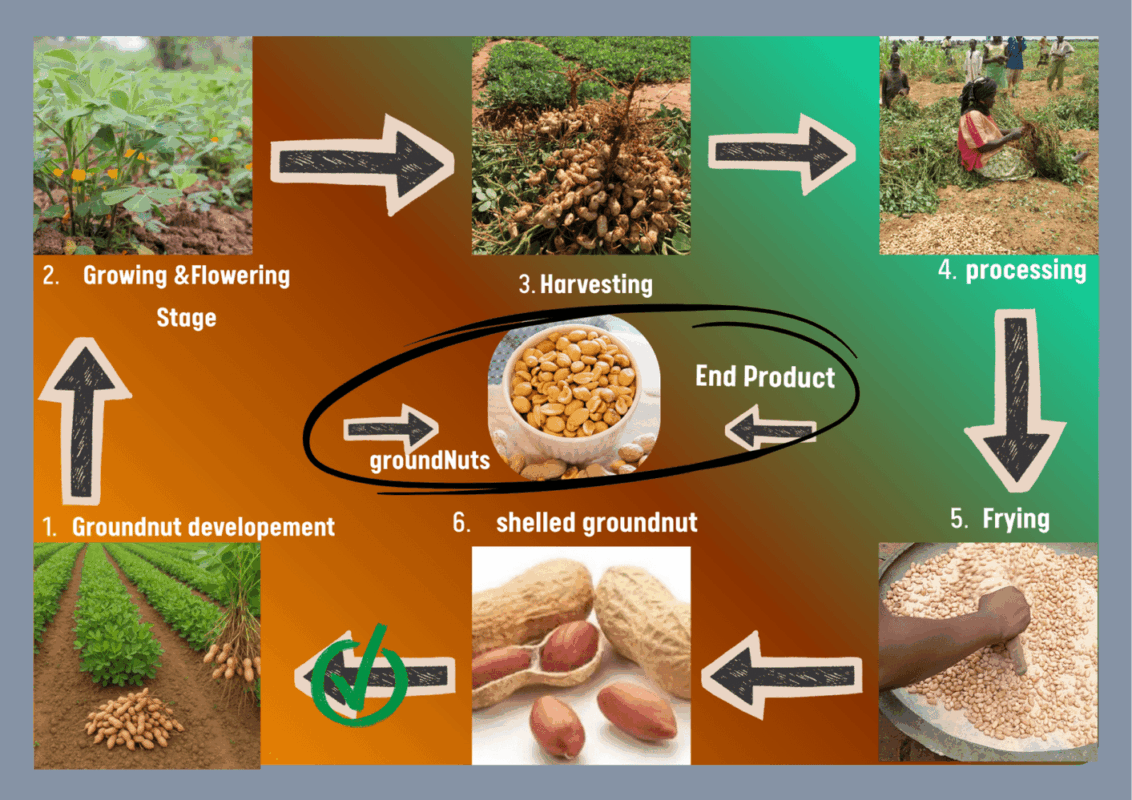
2b. Groundnut (Peanut) Planting, Harvesting, and Processing
This workshop explains the full life cycle of groundnuts, from planting to local processing.
Participants will learn:
- How groundnuts grow underground/ Why we many Africa calls it groundnut instead of nuts.
- How farmers know when they are ready to harvest. How they are dried and cleaned
- How they are locally fried and sell
The demonstration includes traditional local roasting methods using sand and white chalk and explains how groundnuts are prepared for food use and daily consumption.
3. local organic Shea Butter Production (Demonstration)
This workshop shows how organic shea butter is traditionally produced using local methods.
Participants will learn:
- What the shea tree looks like. How the fruit is collected
- How the shells are removed. Drying and washing processes. Grinding and processing
The full process is explained step by step, so children and adults understand how raw natural resources become everyday products like skin cream and hair care butter.
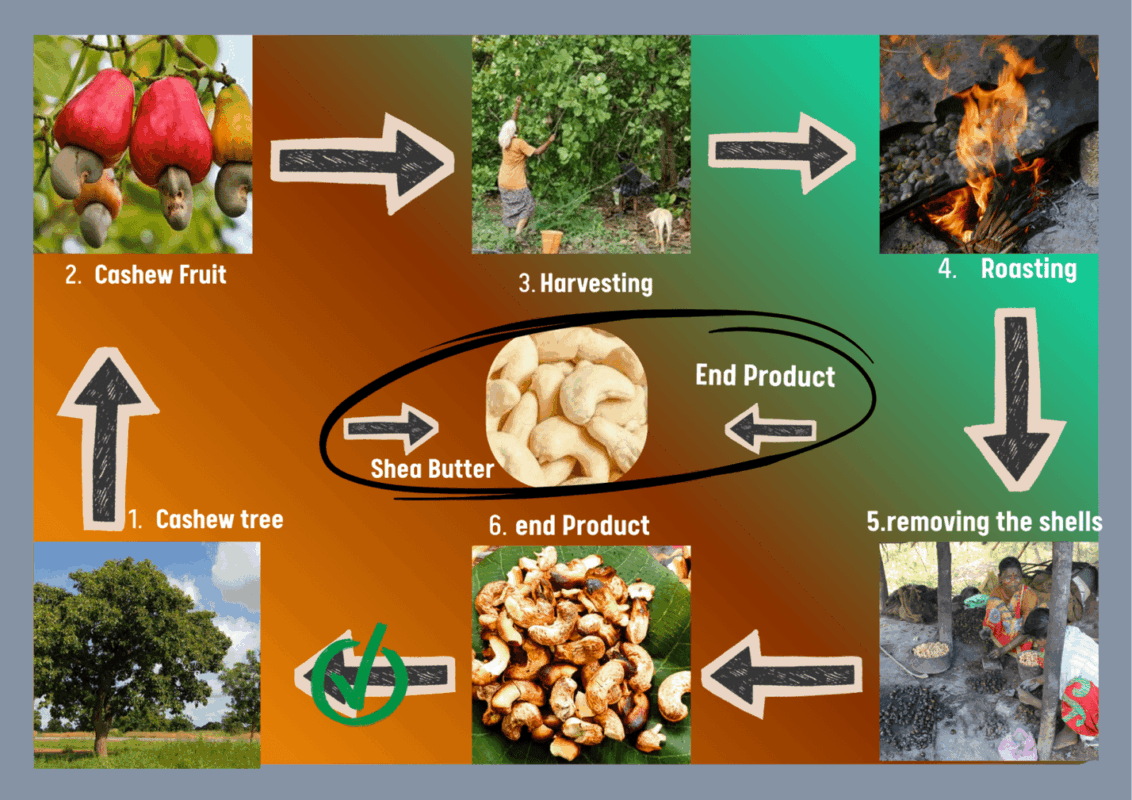
4. Cashew Production Process
This workshop explains how cashew nuts are processed safely and traditionally.
Participants learn:
- How cashew trees grow. How fruits and seeds are harvested/collected
- Drying and washing methods. Traditional roasting and processing
5. African Fufu Production from Cassava
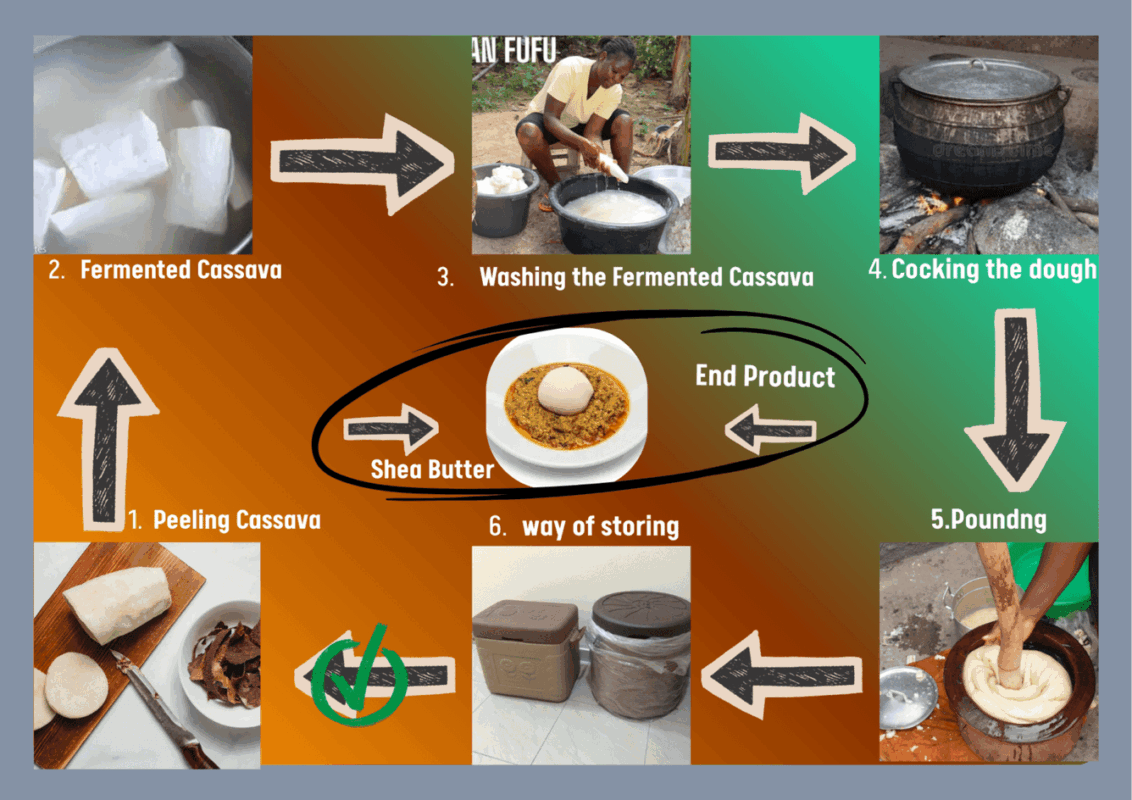
This workshop explains how fufu is produced from cassava, starting from raw root to final food.
The demonstration includes:
- Peeling cassava. Washing. Soaking in water for fermentation. Filtering. Cooking. And Pounding
Children observe and participate, learning how fufu foods are made before they reach the table.
5b. Practical African Food Preparation and Tasting
This section allows kids to experience African food preparation using traditional tools
Participants will see and try food preparation using:
- Yam. Gari. Cassava. Palm oil. Beef and fish. Egusi. Bitter leaf. Spices. Mortar and pestle
The focus is on understanding ingredients, preparation methods, and cultural food practices.
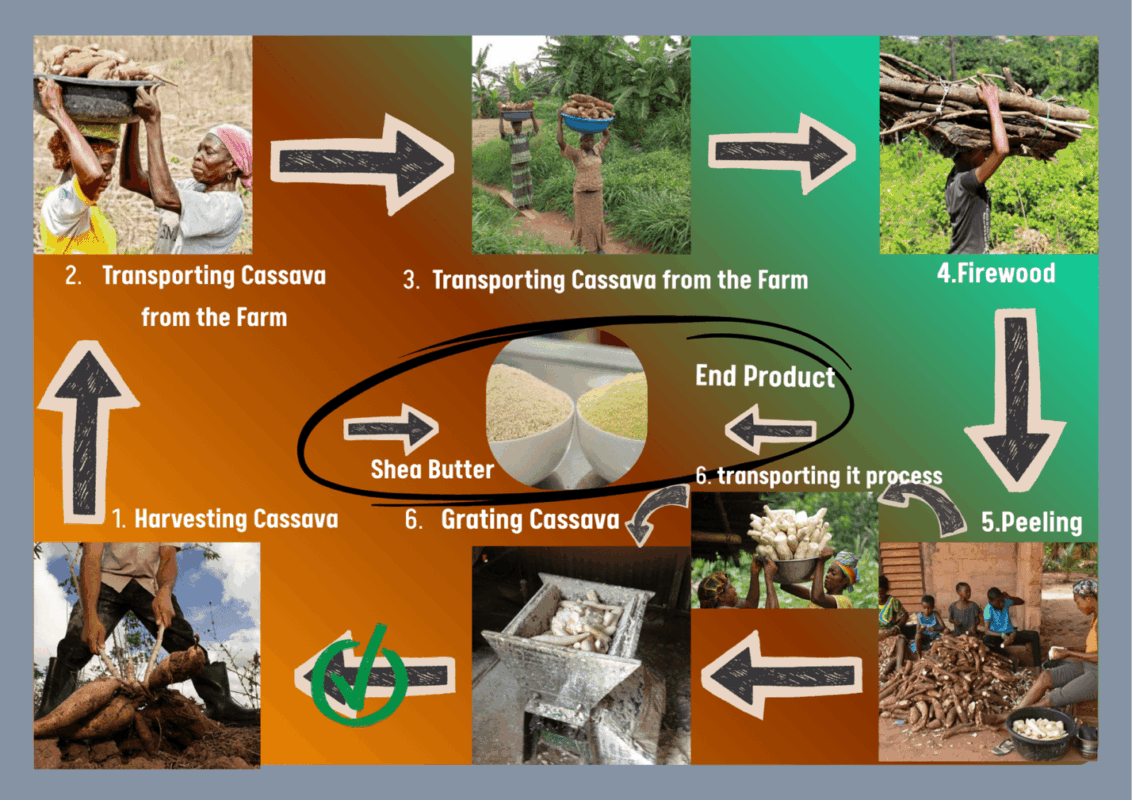
6. Gari Production from Cassava
This workshop explains traditional garri production and the physical labour involved.
Participants learn:
- How cassava grows underground. How it is uprooted and How cassava is carried from farms (often on the head by men, women and kids from 5-8 kilometer)
- Peeling and washing
Processing steps explained:
- Grating. Pressing out water. Filtering and Frying/roasting
This section highlights community work and traditional food systems.
7. Painting and Visual Arts Workshop (Children)
In cooperation with Kunstkrachern and the Bamberg Cultural Office, two facilitators guide children in free and themed painting activities.
A creative space for children to express themselves through painting and drawing.
All materials are provided, and the focus is on creativity, not perfection.
8. Children’s Book Reading Session
Readings by Efua Traoré introduce children to stories that encourage imagination, listening skills, and cultural understanding.
A calm and engaging storytelling session for children.
Cultural & Social Impact
Restores dignity and pride among refugees by giving them a platform to share their culture through performance, storytelling, art, and fashion sand creation.
Promotes Africa’s literary and artistic heritage, showing the depth and diversity of its thought, poetry, and oral tradition.
AFRO-CULTURE DAY: IMPACT ON SOCIETY
- The event serves as a cultural bridge, connecting Bamberg’s residents, Africans, migrants, and visitors in an atmosphere of joy, exchange, and understanding. It helps break down stereotypes and fosters inclusion by presenting African heritage not as something foreign, but as a living, breathing part of Bamberg’s cultural identity.
- Through music, food, art, and storytelling, the event strengthens community bonds, stimulates local tourism, supports small businesses and artists, and contributes to a more open and diverse social landscape.
It also encourages environmental consciousness and creative sustainability through repair, redesign, creating and upcycling workshops turning culture into both celebration and responsibility. - The impact radiates beyond entertainment:
- Promotes intercultural understanding and respect.
TARGET GROUPS
- ACD, target mostly Children and families, through storytelling, creative art, and creativity zones, where they learn to appreciate diversity from an early age.
- Students and youth, exploring Africa’s heritage, literature, and music.
- African diaspora and migrant communities looking for a space to express and celebrate identity.
- Local artists, chefs, and creators eager to share their talents and build networks.
- Curious residents and tourists drawn by the energy of new cultural experiences.
- Refugees and migrants, presenting their talents as part of community awareness, not as employment.
- Artists, educators, and volunteers, working together to promote creativity & inclusion.
- Afro-Culture Day welcomes everyone but focuses especially on historical education, awareness, togetherness, creation and participation: This event allows everyone from the youngest child to the oldest storyteller to learn, teach, and belong.
- here cultural expression becomes a tool of connection, renewal, and peace.
CULTURE IS THE WAY OF LIFE
AFRO-CULTURE REMINDS US ON HOW DEEP MIGRATION PLAY ROLE IN KEEPING AND REDIFINE CULTURE
VISION
- To make Bamberg a city where cultures learn from each other, where children grow up with awareness, aware and grow with different culture and appreciation of Africa’s contribution to art, thought, and humanity, and where refugees are seen not as outsiders, but as carriers of wisdom and creativity.
- The vision of Afro-Culture Day is to continue building a recurring celebration of awareness where African music, literature, and craftsmanship teach values of unity, peace, and giving.
GOALS
- Cultural Exchange & Integration
- To create a recurring space where African and Bamberg cultures meet, share, and celebrate together.
- To build a stronger intercultural understanding within Bamberg’s community.
Artistic Development & Creativity & Artistic Connection
- To support artists, dancers, and musicians from Africa and beyond through exposure and performance opportunities.
- To inspire the next generation of creators through interactive workshops and storytelling.
- Present African literature readings and storytelling sessions for adults and youth.
- Highlight African authors, poets, and thinkers who express the continent’s humanity and wisdom.